Renting a House in Bangna–Bang Phli: What to Check Before You Sign
6 min read
A rented house around Bangna and Bang Phli suits families who want more space than a condo, parking, and room for pets. But renting a whole house means more to check than renting a unit. Here is what to look at, from before you agree to the day you get the keys.
Why families rent houses here
Bangna–Wongwaen and Bang Phli are full of housing estates, so rental houses come in many sizes, usually with parking on the plot, a front garden, and estate security. Mega Bangna is close, the Burapha Withi Expressway is easy to reach, and Suvarnabhumi Airport is not far.
The catch: no rail line runs through this stretch yet, daily life mostly needs a car, and Bangna–Trat Road is often congested at rush hour.
Costs to budget for
Before handing over the keys, most landlords ask for a deposit of 1–2 months plus 1 month’s rent in advance. This is negotiable; make sure the lease says what each payment is for.
- Estate common fee: agree whether tenant or owner pays it
- Water and electricity: houses usually have their own meters with the Metropolitan Waterworks and Electricity Authorities, which serve both Bangkok and Samut Prakan. Ask to see recent bills to estimate costs
- Upkeep: lawn, air-conditioner cleaning, or a pool. Agree who is responsible
- Internet: check fibre already reaches the estate
What to inspect before you agree
View the house in daylight, allow at least half an hour, and ask to actually switch everything on.
- Every air conditioner: does it cool, drip, or rattle?
- Water pump and pressure: run several taps at once and flush every toilet
- Ceilings and walls: look for water stains, a sign of roof or pipe leaks
- Termites: check door frames, wooden cabinets, and stair edges
- Doors, windows, and locks: all lock, with every key and remote
- Mobile signal inside the house
Check the estate and the commute too
- Ask security or neighbours whether the estate roads or houses flood in the rainy season
- Drive to work or school at real rush hour before you decide
- Read the estate rules: pets, street parking, and registering tenants with the juristic office
What the lease should cover
A clear lease prevents disputes at move-out. Landlords renting out 5 or more homes as a business must follow the Consumer Protection Board’s rules on residential leases; an owner renting out a single house is not covered, which makes it all the more important to put the terms in writing.
- Lease term, rent, and payment date
- Deposit amount, what can be deducted, and when it is returned after move-out
- Who repairs what: normal wear versus damage caused by the tenant
- Common fee, pets, and alterations or installations
- Ending the lease early
- An inventory of furniture and appliances attached to the lease
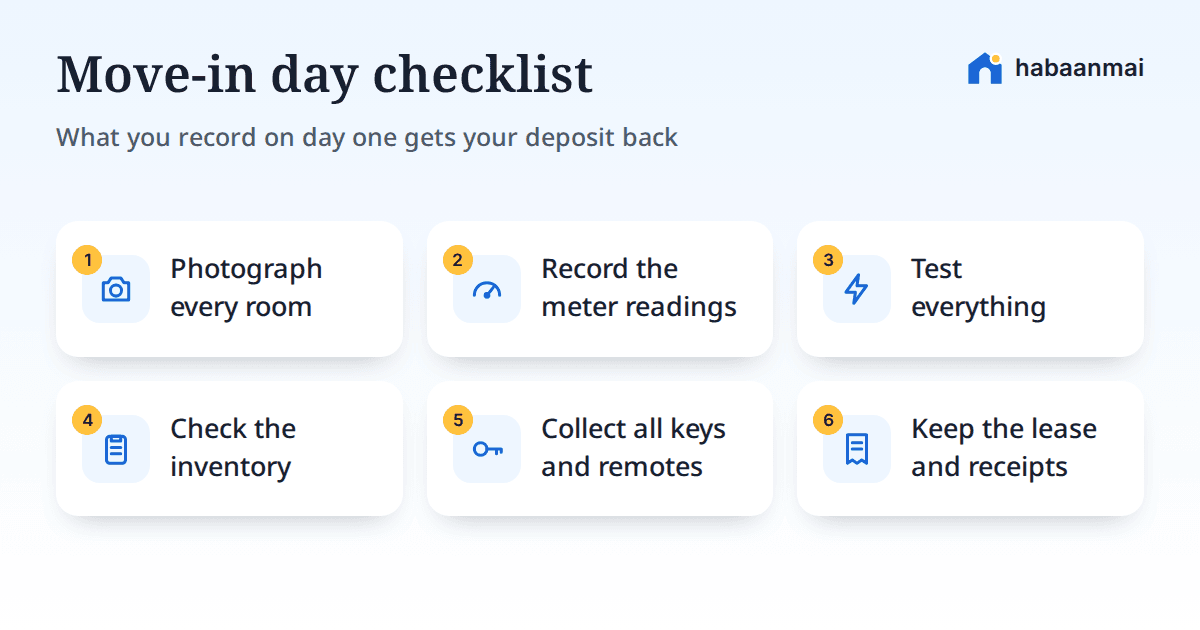
Six things to do on move-in day
What you record on day one is what gets your deposit back on the last day.
- Photograph and video every room, including existing marks
- Note and photograph the water and electricity meter readings
- Test the air conditioning, water, lights, and every appliance
- Check the furniture against the inventory attached to the lease
- Collect every key, gate remote, and estate pass
- Keep the lease and every receipt until your deposit is returned
Verify the landlord before paying
Ask to see the landlord’s ID and a copy of the title deed or a power of attorney; the names must match. Never pay a deposit before seeing the house, and pay into an account in the owner’s name. Our article on spotting rental scams has more.